Geely GX3 Pro(X3pro) International Version Officially authorized, not affected by the new policy, export as usual
27/11/2025
2026 GAC GS3 Emzoom (Shadow Speed) 270T Review & Full Specs | PortAuto
12/12/2025
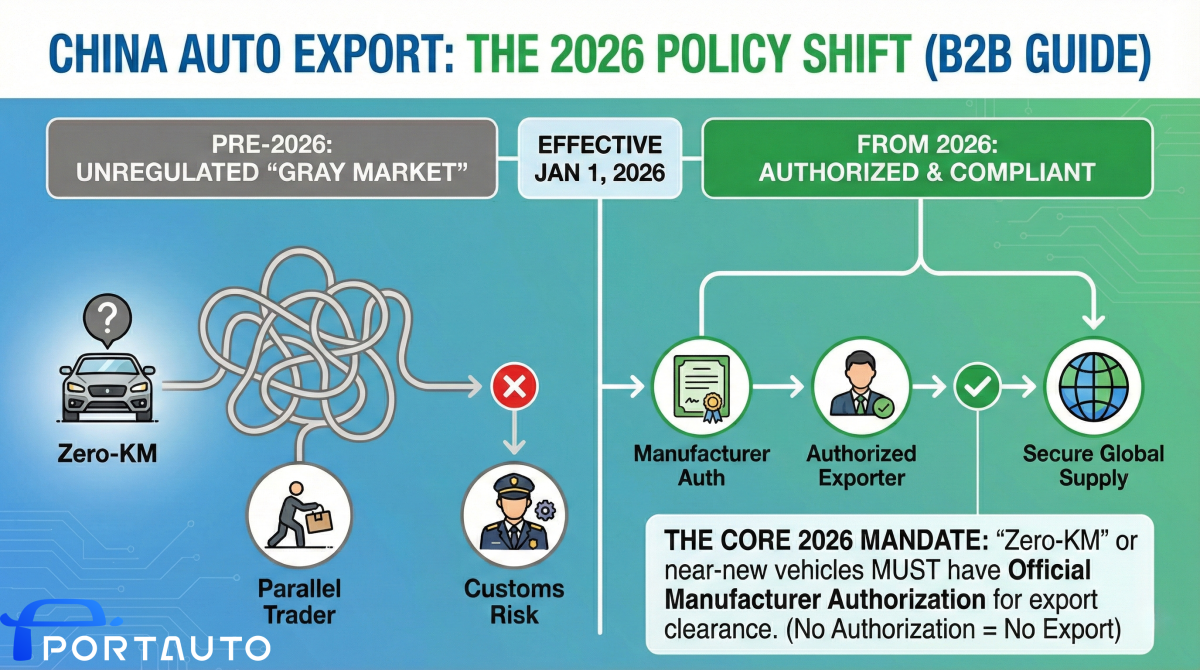
The global automotive landscape is about to change. For the past few years, the world has witnessed a surge in Chinese vehicle exports, driven by competitive pricing and cutting-edge EV technology. However, starting January 1, 2026, the “Wild West” era of parallel exports is coming to an end.
China’s Ministry of Commerce is implementing stricter regulations focused on quality control and manufacturer authorization. If you are a car dealer or importer sourcing from China, this isn’t just news—it’s a signal to audit your supply chain.
Here is everything you need to know about the new policy and how to prepare your business.
Core Change: The “180-Day” Rule
At the heart of the new regulation is a move to differentiate between “Used Cars” and “New Cars.”
Currently, many “Zero-KM” (brand new) cars are exported under “used car” licenses to bypass strict manufacturer distribution rules. Starting Jan 1, 2026, this loophole will close.
The new rule states:
Any vehicle registered for less than 180 days must provide a “Certificate of After-Sales Service” or explicit authorization from the manufacturer to be cleared for export.
In simple terms: If your supplier is buying a new BYD or Zeekr, registering it, and trying to ship it to you the next week without the factory’s permission, it will not pass customs.
Why Is This Happening?
This is not a ban; it is a maturity milestone for the Chinese auto industry. The government aims to:
- Protect the Brand Reputation: Ensure that international buyers receive proper service and warranty support, not just a car.
- Eliminate “Gray Market” Chaos: Reduce the number of unauthorized traders who disrupt pricing structures and offer zero after-sales support.
- Encourage Official Channels: Push dealers to work with authorized exporters who have direct lines to the factories.
Three Ways This Impacts Your Business
While this might sound restrictive, it is actually good news for professional B2B buyers. Here is why:
1. Price Stability Returns The “race to the bottom” will end. Without thousands of small traders undercutting the market with unauthorized stock, prices will stabilize. This protects your margins and inventory value.
2. Supply Chain Security Working with “gray market” suppliers carries a high risk of customs seizures or abrupt cancellations. Under the new rules, compliant exporters offer a stable, predictable flow of inventory.
3. Enhanced Quality Assurance The new policy mandates stricter inspection standards. When you import a car under the new regime, you are guaranteed a higher standard of compliance and vehicle condition.
How to Prepare: A Checklist for Importers
Do not wait until December 2025 to act. Here is what you should do now:
- Audit Your Suppliers: Ask your current partners directly: “Do you have the manufacturer authorization required for 2026?”
- Diversify Your Portfolio: Consider a mix of true used cars (older than 6 months) and authorized new inventory.
- Secure Inventory Early: The second half of 2025 will likely see a “rush to ship” before the deadline. Plan your Q3 and Q4 orders now to avoid logistics bottlenecks.
Why Partner with PORTAUTO?
At PORTAUTO, we have anticipated this shift. Unlike temporary traders, we are a fully licensed export entity with established manufacturer relationships.
- Compliant: We are ready for the 2026 regulations.
- Authorized: We hold direct export authorizations for key brands.
- Reliable: We handle the complex paperwork so you can focus on sales.
The rules are changing, but the opportunity is growing. The future of China Auto Export belongs to professional, compliant partnerships. Make sure you are on the right side of the change.
https://www.portauto.com/partners-portauto/
Are you ready to future-proof your inventory?
Contact our team today for a free consultation on how the 2026 Policy affects your specific market. Let’s build a sustainable supply chain together.
Frequently Asked Questions (FAQ) About China’s 2026 Auto Export Policy
Q: When does the new China auto export policy come into effect? A: The new regulations, specifically regarding the “180-day registration rule” and manufacturer authorization requirements, will officially be enforced starting January 1, 2026. However, we advise all importers to secure their supply chains by late 2025 to avoid logistics bottlenecks.
Q: Can I still import “Zero-KM” used cars from China after 2026? A: The rules are changing. Vehicles registered for less than 180 days can no longer be exported as “used cars” without a specific “Certificate of After-Sales Service Confirmation” from the manufacturer. This effectively closes the “gray market” loophole for unauthorized parallel exports of new vehicles.
Q: How do I verify if my Chinese supplier is compliant? A: You should ask your supplier to provide proof of their Manufacturer Authorization for the specific brands they are selling. A compliant exporter (like our company) will have direct access to factory-authorized stock and the necessary paperwork to clear Chinese customs under the new regime.
Q: Will this policy affect the price of Chinese EVs? A: In the short term, you may see price stabilization. While “dumping” prices from unauthorized traders will disappear, the market will become more predictable. The focus is shifting from “lowest price possible” to “sustainable, supported supply.” This protects your inventory value in the long run.
Q: Does this apply to all car brands? A: The policy applies generally to the export of passenger vehicles, but it is most strictly enforced on high-demand New Energy Vehicles (NEVs) like BYD, Zeekr, Li Auto, and others that have been heavily traded in the parallel market.